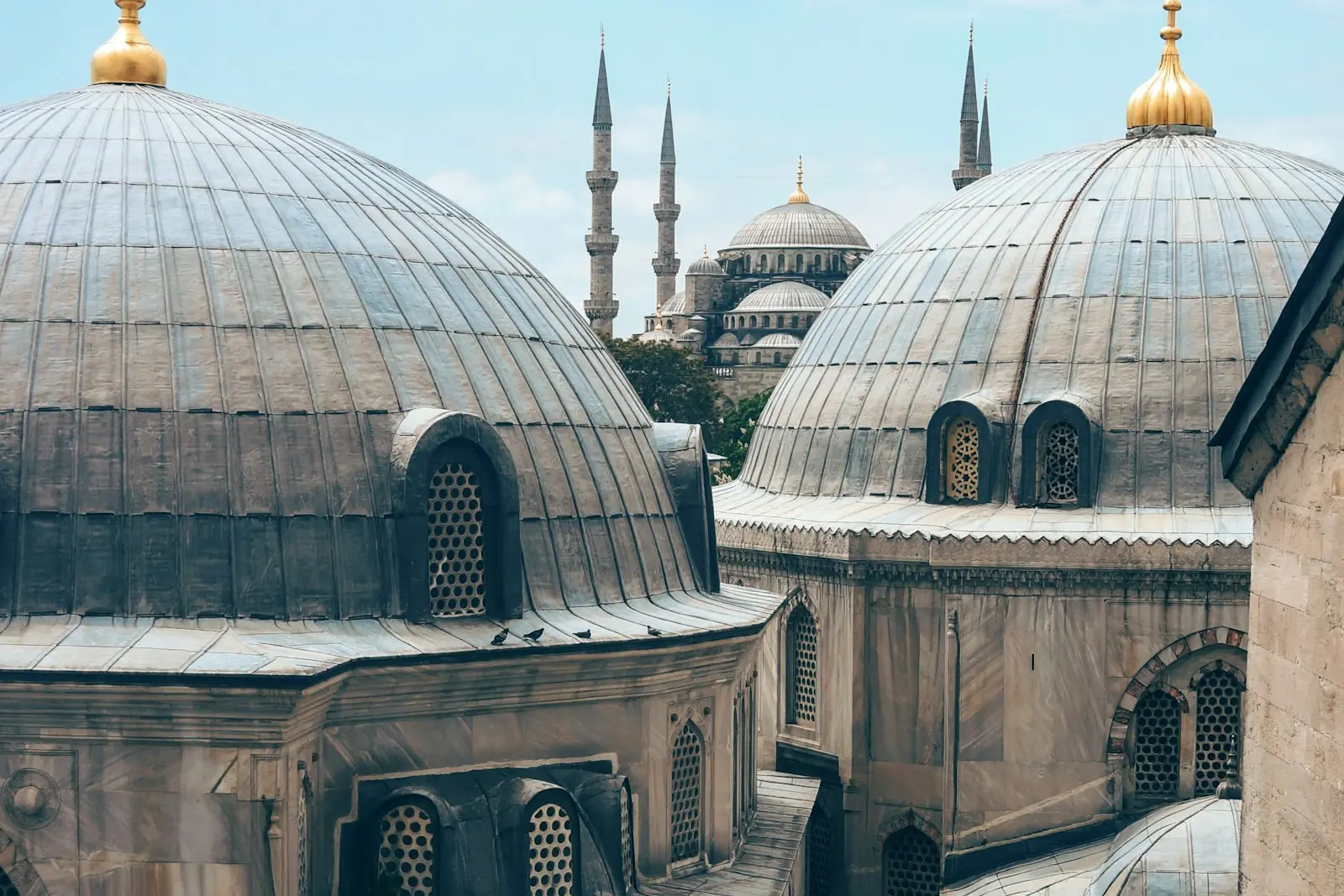
Study in Türkiye
Where Europe meets Asia: quality, value and a rich student experience.
Türkiye sits between Europe and Asia and has one of the largest higher-education systems in the region. The official Study in Türkiye portal, run by the Council of Higher Education, lists 208 universities and nearly 45,000 degree programmes, taught in Turkish, English and other languages.
Fees, visa rules and deadlines change regularly. This guide was last reviewed on 14 October 2026 for 2026/27 entry. Figures are estimates for planning; always confirm with the university and the official sources listed below.
Why study in Türkiye?
- Choice. State and foundation universities in Istanbul, Ankara, Izmir and many other cities.
- Value. Tuition at state universities is generally lower than in many Western European countries.
- English-taught programmes. Available at many universities, often with an English preparatory year if you need it.
- Scholarships. The government's Türkiye Scholarships (Türkiye Bursları) programme accepts international applicants.
- Culture and location. A welcoming, historic country with direct flights to Pakistan and much of the world.
The higher education system
Higher education is overseen by the Council of Higher Education (YÖK). Programme levels are:
- Associate degree (two years).
- Bachelor's degree (usually four years; medicine and some health programmes take longer).
- Master's degree (with or without thesis).
- Doctorate.
The academic year has a fall semester starting in September or October and a spring semester starting in February.
Types of institutions and qualifications
- State universities are publicly funded. Tuition for international students is set each year by the university within national rules.
- Foundation universities are private, non-profit universities established by foundations. Fees are higher, and many offer merit scholarships and English-taught programmes.
Always check that a programme is officially listed on the Study in Türkiye portal and that the university is recognised in your home country for your intended career.
Study fields to explore
Universities in Türkiye offer programmes in engineering, medicine and health sciences, architecture, business and economics, international relations, computer science and the social sciences. Availability in English varies by university, so we confirm the language of instruction for every programme on your shortlist.
Tuition fees
Tuition depends on the type of university, programme and language of instruction.
| Type | Indicative annual tuition (European Commission Study in Europe profile) |
|---|---|
| State university, bachelor's | about €250 to €700 |
| State university, master's | about €500 to €1,200 |
| Foundation (private) university | about €4,000 to €20,000 |
Medicine, dentistry and some English-taught programmes cost more. Some state universities publish international fees in US dollars per semester, so check whether a figure is per semester or per year.
These are estimates for planning only. Confirm the current fee on the university's official fee schedule for your intake year.
Living expenses
Living costs vary significantly between cities. Istanbul is generally the most expensive, while cities such as Ankara, Konya, Eskişehir or Erzurum are usually more affordable.
Your budget should cover accommodation, food, local transport, health insurance (required for your residence permit), residence permit fees and course materials. We do not publish a single figure because prices in Türkiye have changed quickly; ask us for a current estimate for your chosen city.
Admission requirements
Each university sets its own admission criteria for international students. Common routes include:
- Secondary school results (for example, Pakistani Intermediate/HSSC grades).
- International exams such as the SAT, or the TR-YÖS exam or a university's own entrance exam.
- For postgraduate study, a recognised bachelor's or master's degree, sometimes with ALES/GRE or GMAT scores and an interview.
Some universities also require an equivalence or recognition document for foreign qualifications.
Language requirements
- Turkish-taught programmes usually require proof of Turkish proficiency, or a one-year Turkish preparatory programme at a university language centre.
- English-taught programmes usually require an accepted English test (such as IELTS or TOEFL) or the university's own proficiency exam. Students who do not meet the level may join an English preparatory year.
Requirements differ between universities, so we confirm them for each programme.
Intakes and application planning
- Fall intake (September/October): the main intake for most programmes.
- Spring intake (February): offered by some universities and programmes.
University application windows are usually several months before the semester starts. The Türkiye Scholarships programme runs one application period each year; check the official website for current dates.
Required documents
Requirements vary by university and consulate, but usually include:
- A valid passport.
- Secondary school or degree certificates and transcripts, with translations and attestation where required.
- Language test results, if required.
- Passport photographs.
- An official acceptance letter (for the visa).
- Evidence of how you will pay tuition and living costs.
After arrival you will also need health insurance, proof of address and your student certificate for the residence permit.
Student visa overview
- Student visa: after you receive your acceptance letter, apply for a student visa at the Turkish embassy or consulate responsible for your area. Apply early, as processing can take time.
- Student residence permit: if you stay longer than 90 days, you must obtain a student residence permit after arrival. The application starts online on the official e-İkamet system of the Presidency of Migration Management, followed by document submission. Many universities submit residence permit files on behalf of their students and set their own deadlines.
Typical residence permit documents include the signed application form, passport copies, biometric photos, student certificate, fee receipt, proof of address and valid health insurance.
Want help preparing your visa documents?
We explain the requirements and check your documents before you apply.
Talk to a counsellorPost-study work options
- During studies: a residence permit does not give the right to work. Undergraduate and associate degree students can work part-time only after their first year, and only with a work permit that the employer applies for through the Ministry of Labour and Social Security.
- After graduation: graduates of Turkish universities can apply for a one-year short-term residence permit within six months of graduating, to look for work in Türkiye.
- Working after graduation requires a job offer and an employer-sponsored work permit.
Rules can change, so confirm the current position with your university's international office before taking any job.
Accommodation and student life
- University dormitories are available at many universities and are usually the most affordable option.
- Private dormitories and student residences are common in large cities.
- Shared flats give more independence but require a rental contract and deposit.
Türkiye offers a rich cultural life, historic cities, a familiar food culture for many Pakistani students and an active international student community.
Frequently asked questions
Can I study in English in Türkiye?
Yes. Many state and foundation universities offer English-taught programmes. If your English is not yet at the required level, you may be able to join an English preparatory year first.
Do I need a residence permit in Türkiye?
Yes, if you will stay longer than 90 days. After arrival you apply online through the official e-İkamet system and then submit your documents, often through your university.
Can international students work in Türkiye?
Undergraduate and associate degree students can work part-time after their first year, but only with a work permit applied for by the employer. A residence permit alone does not allow you to work.
Sources and review information
- Last reviewed
- 14 October 2026
- Applies to
- 2026/27 entry
- Reviewed by
- Zextro Global content team
Official and institutional sources
- studyinturkiye.gov.tr (opens in a new tab)
- education.ec.europa.eu (opens in a new tab) /study-in-europe/country-profiles/turkiye
- iso.metu.edu.tr (opens in a new tab) /tr/system/files/2025-2026_tuition_fee_11082025.pdf
- e-ikamet.goc.gov.tr (opens in a new tab)
- sis.itu.edu.tr (opens in a new tab) /EN/student/intenational-students/residence-permit.php
- ktu.edu.tr (opens in a new tab) /oisa/useful-information/tab1
- istinye.edu.tr (opens in a new tab) /en/ikamet/announcements/regarding-work-rights-international
- turkiyeburslari.gov.tr (opens in a new tab)
Compare other destinations
Dream Beyond Borders.
Plan your studies in Türkiye
Tell us about your education and goals. A counsellor will review your profile and contact you to arrange a free consultation.